Western Civilization Explained: Roots, Values, Evolution, and Global Impact

"Western civilisation" is one of those phrases that feels self-evident until someone asks what it actually means. It surfaces in school curricula, political speeches, museum placards, films, and heated debates over identity, yet it names no single country, ethnicity, language, or religion. Rather, it designates a broad historical tradition, forged over millennia through ideas, institutions, conflict, invention, art, and exchange.
At its most basic, Western civilisation refers to the cultural and intellectual lineage that emerged from the ancient Mediterranean world, matured across Europe, and later extended its reach through colonisation, trade, migration, education, and global power. Its history is one of striking contradiction: democracy coexists with empire, philosophy with war, cathedrals with factories, human rights with conquest. The tradition has inspired enduring ideals of liberty and reason, even as it has generated the very tensions and injustices that modern societies continue to confront.
To understand it well, we need to look at where it began, what shaped it, and why it still matters.
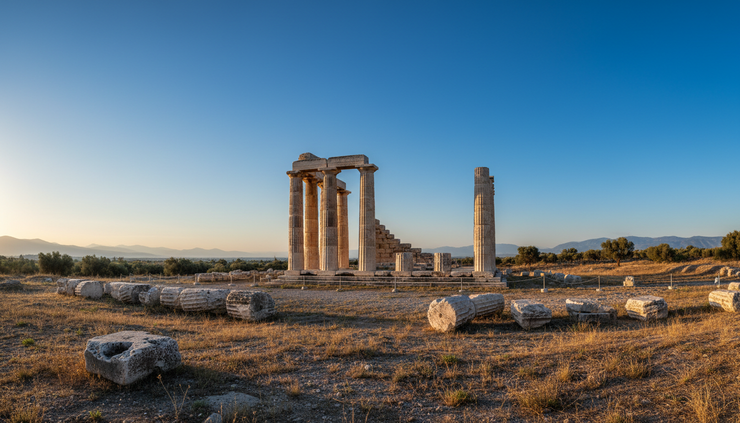
Western civilisation is a shared tradition, not a fixed place
Western civilisation is often linked with Europe and the societies influenced by European history, including countries in North America, Australia, New Zealand, and parts of Latin America. Yet its roots reach beyond modern borders. Ancient Greece learned from Egypt and the Near East. Rome absorbed ideas from across the Mediterranean. Medieval Europe preserved and reworked knowledge through contact with Islamic scholars, Jewish thinkers, Byzantine writers, and Asian trade networks.
That means Western civilisation is best understood as a family of ideas and institutions rather than a closed cultural box.
Some of its key characteristics include:
Area | Common features |
Politics | Citizenship, law, constitutional government, representative institutions |
Philosophy | Reasoned debate, ethics, logic, inquiry into truth and knowledge |
Religion | Strong influence of Christianity, alongside Jewish, classical, and later secular traditions |
Science | Observation, mathematics, experimentation, and organised research |
Culture | Literature, theatre, visual art, music, architecture, and historical writing |
Economy | Markets, private property, industrial production, and global trade |
Social ideals | Individual dignity, rights, education, civic duty, and public debate |
These features did not appear all at once. They also did not develop smoothly. Western history includes slavery, religious persecution, colonial violence, class conflict, and exclusion based on gender, race, and belief. Many of its most admired ideals emerged through struggle against those injustices.
Ancient Greece gave the West its questions
Ancient Greece did not invent civilisation, but it shaped many of the questions that became central to the Western tradition.
Greek thinkers asked what justice is, how people should live, what makes a good society, and whether truth can be reached through reason. Socrates challenged citizens to examine their beliefs. Plato explored ideal forms of government and the nature of knowledge. Aristotle wrote about logic, ethics, politics, biology, drama, and rhetoric with a scope that influenced scholars for centuries.
Greek city-states also experimented with political participation. Athens is famous for democracy, although it was limited to male citizens and excluded women, enslaved people, and foreigners. Even with those limits, the idea that citizens could debate laws and public policy left a lasting mark.
Greek culture also shaped Western art and literature. Epic poetry, tragedy, comedy, sculpture, architecture, and historical writing all became models for later generations. The Greek search for balance, proportion, and rational order can still be seen in public buildings, legal language, and educational traditions.
Ancient Rome gave the West its institutions
If Greece gave Western civilisation many of its questions, Rome gave it many of its structures.
The Roman Republic developed ideas about civic duty, mixed government, public office, and legal accountability. Later, the Roman Empire connected vast territories through roads, cities, armies, trade, and administration. Latin became a language of law, learning, religion, and government across much of Europe.
Roman law became one of Rome’s most durable contributions. Its influence appears in legal systems across continental Europe and beyond. Even where common law later developed, as in Britain and countries influenced by British institutions, Roman legal thinking helped shape ideas about property, contracts, citizenship, and public authority.
Rome also spread urban life. Forums, baths, aqueducts, amphitheatres, bridges, and roads showed a practical genius for engineering and public works. The Roman world linked local communities to a wider political order, an idea that later empires and states would copy in different forms.
The rise of Christianity within the Roman Empire changed the course of Western history. After centuries of persecution and debate, Christianity became deeply woven into European culture, education, ethics, art, and political authority. The Christian belief in the moral worth of each person would later interact with classical philosophy, law, and modern rights language in complex ways.

The Middle Ages preserved, argued, and built
The Middle Ages are sometimes wrongly dismissed as a pause between Rome and the Renaissance. In reality, medieval Europe transformed the classical inheritance.
Monasteries copied manuscripts. Universities emerged in cities such as Bologna, Paris, and Oxford. Scholastic thinkers used reason to debate theology, ethics, law, and nature. Thomas Aquinas, for example, brought Aristotle into conversation with Christian thought.
Medieval Europe also produced Gothic cathedrals, illuminated manuscripts, chivalric literature, parliamentary beginnings, guilds, and town charters. Power did not sit in one place. Kings, nobles, churches, cities, and customary law all competed.
This messy balance helped create a habit of institutional negotiation. Over time, it contributed to representative bodies, legal limits on rulers, and the idea that authority should answer to law, not only force.
The Renaissance revived classical learning and human creativity
The Renaissance began in Italian city-states and spread across Europe from the 14th century onward. It did not simply copy Greece and Rome. It reimagined them.
Renaissance humanists studied classical texts, languages, history, and moral philosophy. They placed new emphasis on education, civic life, and human potential. Artists and architects looked to classical proportion while developing new methods such as linear perspective.
Leonardo da Vinci, Michelangelo, Raphael, and many others became symbols of the era’s confidence in observation and skill. The printed book, made far more available by the printing press, helped ideas travel faster and reach wider audiences.
The Renaissance also changed attitudes toward knowledge. People became more willing to study the natural world directly, compare texts, question inherited authorities, and celebrate individual achievement. This did not create modern science by itself, but it helped prepare the ground.

The Enlightenment placed reason at the centre of public life
The Enlightenment of the 17th and 18th centuries pushed a powerful claim: societies could improve if people used reason, evidence, and open debate.
Thinkers such as John Locke, Montesquieu, Voltaire, Mary Wollstonecraft, David Hume, Adam Smith, and Immanuel Kant argued about rights, knowledge, power, economics, religion, and moral duty. They did not agree on everything. Their shared legacy lies in the belief that authority should be questioned and that public life should be judged by standards beyond tradition alone.
The Enlightenment influenced constitutional government, religious toleration, legal reform, scientific culture, and education. It helped shape the American and French revolutions, along with later reform movements in Europe and across the world.
Two ideas became especially important:
Government should be limited by law
Rulers should not hold unchecked power. Constitutions, courts, parliaments, and rights claims all grew from this concern.
People have moral and political claims as individuals
This idea developed unevenly. Many Enlightenment societies still tolerated slavery, colonial domination, and the exclusion of women. Yet the language of rights soon became a tool for abolitionists, feminists, workers, colonised peoples, and civil rights movements.
The Industrial Revolution changed everyday life
The Industrial Revolution began in Britain in the 18th century and spread to Europe, North America, and beyond. It transformed Western civilisation more physically than any movement before it.
Steam power, mechanised textile production, coal mining, railways, iron, steel, and later electricity changed how people worked, travelled, communicated, and lived. Rural populations moved into growing cities. Factories replaced many older forms of labour. Goods became cheaper and more abundant, but working conditions could be harsh and unsafe.
Industrialisation also altered politics. New working classes organised for wages, voting rights, and labour protections. Reformers pushed for public health, schooling, sanitation, and safer workplaces. Capitalism expanded, but so did socialism, trade unionism, and modern welfare ideas.
The Industrial Revolution increased Western power on the global stage. Steamships, weapons, factories, and finance strengthened European empires. This brought railways, ports, schools, and legal systems to colonised regions, but often through coercion, exploitation, land seizure, and cultural disruption. Any honest account of Western civilisation must hold both sides together.

Western civilisation made major cultural and philosophical contributions
The Western tradition has produced works and ideas that continue to shape global culture.
In literature, its range runs from Homer, Sophocles, Virgil, Dante, Shakespeare, Cervantes, Austen, Dickens, Dostoevsky, Woolf, and many more. These writers explored heroism, suffering, ambition, love, guilt, freedom, and social change.
In music, Western traditions developed notation, harmony, orchestral forms, opera, chamber music, and later jazz, rock, film scores, and popular music. Classical composers such as Bach, Mozart, Beethoven, and Debussy remain part of a living global repertoire.
In visual art and architecture, Western civilisation produced Greek temples, Roman arches, Gothic cathedrals, Renaissance frescoes, Baroque churches, modernist painting, public galleries, and experimental art movements.
Its philosophical contributions are just as wide. Western thinkers have shaped debates about:
What counts as knowledge
Whether morality is universal or shaped by culture
What freedom means
How power should be limited
Whether faith and reason can work together
What duties people owe to one another
How societies should organise wealth and labour
These questions now belong to the world, not only to the West.
Western political ideas shaped the modern world
Modern democratic life draws heavily from Western political development, even though democracy now has many local forms.
Ideas such as the rule of law, elected legislatures, civil liberties, independent courts, free inquiry, and constitutional limits on power have spread widely. They shaped institutions in countries influenced by British, French, American, Dutch, Spanish, and other European models.
Australia, for example, inherited parliamentary government, common law traditions, and many civic ideas from Britain, while also adapting them in its own democratic setting. At the same time, Australia’s history shows the darker edge of Western expansion, including dispossession of First Nations peoples and the long struggle to build a more inclusive democracy.
This pattern appears across the modern world. Western political ideals often travelled with empire, yet those same ideals gave people language to resist empire. Independence movements, human rights campaigns, anti-apartheid struggles, and Indigenous rights movements have all used ideas of dignity, law, equality, and self-government.
Western civilisation keeps evolving
Western civilisation is not a museum piece. It has changed through conflict, criticism, migration, and exchange.
The 20th century tested Western ideals severely. Two world wars, fascism, genocide, nuclear weapons, and the Cold War shattered easy confidence in progress. At the same time, the period saw major advances in human rights law, decolonisation, women’s rights, civil rights, public education, medicine, and international institutions.
Today, Western societies are more diverse and secular than they once were. Christianity remains influential, but many people live in pluralist societies with multiple faiths and non-religious world views. Old hierarchies face stronger challenges. Universities, courts, parliaments, media, and cultural institutions continue to debate what freedom, equality, truth, and justice mean.
Western civilisation’s global impact is also mixed. Its science, political ideas, universities, literature, medicine, technology, and rights language have shaped modern life almost everywhere. Its imperial history, economic dominance, environmental impact, and cultural power have also caused harm and resistance.
The result is not a simple story of triumph or decline. It is a long argument about how people should live together.

The lasting significance of Western civilisation
Western civilisation matters because many of the modern world’s central institutions grew from it or reacted against it. The university, the laboratory, constitutional democracy, market capitalism, human rights law, secular government, modern literature, and large parts of global science all carry traces of this history.
Its most valuable legacy may be its habit of self-criticism. The Western tradition has often failed to live up to its own ideals, but it has also produced tools for exposing those failures. Reasoned debate, historical inquiry, legal challenge, satire, protest, and reform all belong to the story.
To study Western civilisation well is not to praise everything it did. Nor is it to dismiss it as only a history of power. It is to see how ancient questions, religious beliefs, legal traditions, scientific methods, artistic forms, and political struggles combined to shape the world we inhabit.
The key takeaway is simple: Western civilisation is not a finished inheritance. It is an ongoing conversation about freedom, responsibility, truth, beauty, power, and human dignity. Its future depends on how honestly each generation understands that conversation and how wisely it chooses to continue it.


Comments